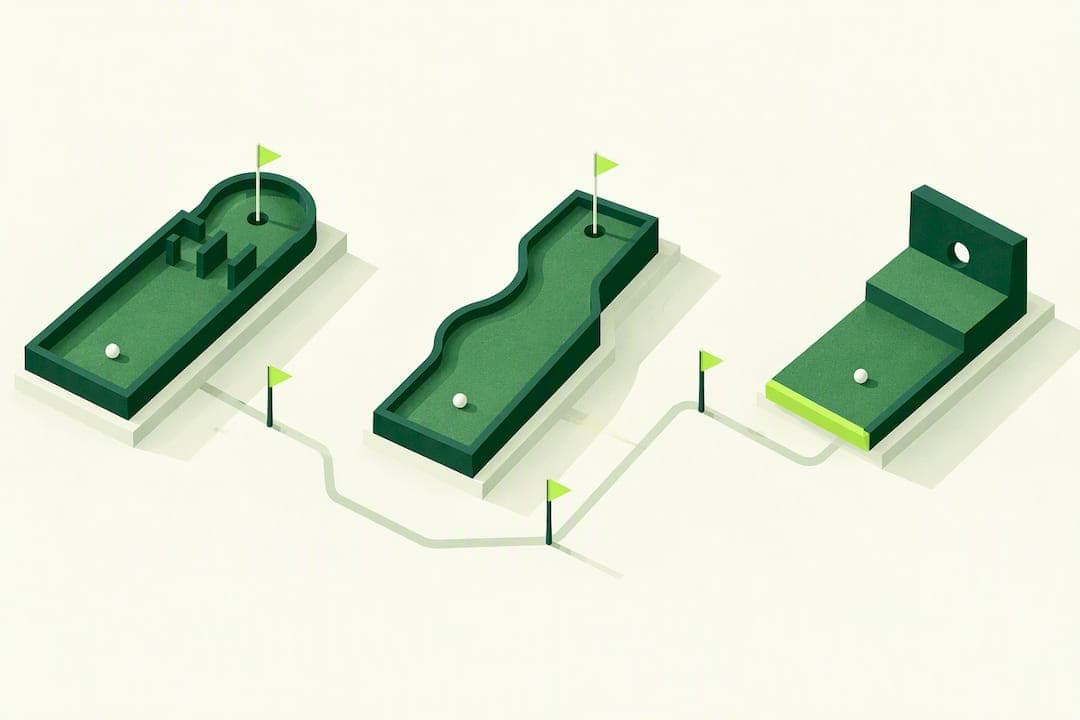
A working putting contest setup needs five things: a chosen format, a designated putting area kept away from competition greens, basic equipment like cups and mats, a simple signup and scoring method, and a prize worth playing for. This combination works whether you're running a small charity scramble add-on or a full club social event. You can put it together in an afternoon.
TL;DR:
- Use a portable green to maintain control over layout and keep contest traffic off the course, especially if hosting a large or evening event.
- Allocate roughly 20 to 30 seconds per attempt for single-putt formats or two to three minutes per round for Around the World, adjusting staffing accordingly.
- Implement clear local rules and designate a final arbiter to reduce disputes and streamline award decisions, as practiced in PGA and USGA guidelines.
- Promote the contest through signage, social media, and sponsor involvement to maximize participation and sponsorship value.
- Prepare a backup plan for weather issues, including indoor options and adjustments for wind, rain, heat, or lightning to ensure safety and fairness.
- ✓Hole-by-hole score entry
- ✓Live tournament leaderboards
- ✓Mobile-friendly scoring
- ✓Minimal setup
Table of Contents
- Proven putting contest formats and when to use each
- Equipment and physical setup checklist with placement guidance
- Rules and USGA considerations to avoid conflicts with competition play
- Operational playbook: registration, scoring, staffing, timing, and prizes
- Sponsorship and fundraising tactics using the putting green
- Three ready-to-run sample setups with exact steps
- Safety considerations during the contest
- Tips for course design to enhance player experience
- Techniques for handling weather conditions during the contest
- Marketing and promotion strategies to increase participant turnout
- What I've seen work and what to avoid
- Optional tool: quick signup and live leaderboards for your contest
- FAQ
- Sources
Proven putting contest formats and when to use each
Pick your format based on how much time you have and how many people you expect. A quick pre-round activation needs something fast. A banquet closer can afford to run longer.
- Long putt: one attempt from a set distance, winner closest to the hole; great for pre-round or banquet timing and handles large groups fast.
- Closest to pin: single putt judged by distance from a target cup; works well as a side contest during shotgun starts.
- Around the World: players putt from several stations circling one hole; best for smaller groups willing to spend more time per turn.
- 3-ball challenge: three putts per player from varying distances, total strokes or makes determine the winner; good for skill-based scoring.
- Team relay: teams alternate putts in a race format; built for energy and crowd noise during breaks.
- Beat-the-pro: participants challenge a hired or volunteer pro to a putt-off; works as a banquet or happy-hour draw.
- Squares or boards: players buy a square tied to a distance or outcome; doubles as a fundraising mechanic more than a skills contest.
For throughput, plan on roughly 20 to 30 seconds per attempt for single-putt formats and two to three minutes per group for Around the World. That math lets you estimate how many volunteers you'll need at peak traffic.
Equipment and physical setup checklist with placement guidance
Before you buy or rent anything, decide between a portable putting green and the course's own practice green. A portable green costs more upfront, but gives you full control over layout, cup placement, and crowd flow, and it keeps contest traffic entirely off the course. The practice green is free but shares space with golfers warming up, which can create bottlenecks.
- Reserve the surface. Book a portable green or confirm practice green availability with the course at least two weeks out.
- Gather the kit. You'll need cups or targets, a mat for the putting line, marker flags or cones, a tape measure, extra balls, scorecards or tally sheets, and a table for registration.
- Set your distances. Long putt stations typically run a moderate distance; closer challenges work best at relatively short distances so beginners can still make a putt.
- Space your stations. Leave at least 6 feet between stations to avoid players backswinging into each other.
- Mark boundaries. Use rope or cones to separate spectators from the putting line, especially during team or relay formats.
- Check accessibility. Place at least one station on a flat, paved or matted path for wheelchair access, and add lighting if the contest runs into evening hours.
- Shelter your staff. A pop-up tent over the registration table protects scorecards and volunteers from sun or light rain.
Pro Tip: Lay your tape measure line the morning of the event, not the night before. Dew and foot traffic shift markers more than you'd expect.
Rules and USGA considerations to avoid conflicts with competition play
Keeping your contest off the competition green isn't just about politeness. The USGA's Local Rules and Terms of the Competition outlines definitions and practice restrictions, and running a separate activation sidesteps any question about whether contest putts count as practice on the course.
- Never set up a contest on a green that's part of active stroke play.
- Watch alignment-device use near putting activities, since the USGA's Additional Clarifications cover self-standing putters and relief near greens.
- Post two short local rules: how many attempts each player gets, and the tiebreak order (closest ball, then sudden-death putt-off).
- Name one judge whose call is final, and put that in writing on your signage.
A short local-rule template built around eligibility, attempts per player, and a judge's decision-is-final clause reduces disputes and speeds up awarding, a structure the PGA Buying & Education Summit's long-putt contest rules follow closely.
Before the event, ask the course pro two things: where contest activity is allowed, and whether the club has its own restrictions on outside equipment or portable greens.
Operational playbook: registration, scoring, staffing, timing, and prizes
Running the contest smoothly comes down to four moving parts working together instead of fighting each other.
- Set your registration flow. Decide between a pre-event signup list, which speeds check-in, or on-site registration, which captures walk-ups. Collect a simple waiver if you're handling paid entries.
- Choose a scoring method. A paper scorecard works for small groups, but a spreadsheet or live scoring app shows standings instantly, which matters when players want to see where they stand before the prize announcement.
- Assign staff roles. You need a marshal to manage the line, a scorer to log results, and a judge to rule on disputes. Three volunteers can usually handle 40 to 60 players per hour depending on format.
- Build your prize tiers. Common structures include a top prize, a runner-up, and a random drawing for participants, which keeps engagement high even for players who don't win the main contest.
- Plan winner notification. Announce results at a set time, post the leaderboard where players can see it, and have the judge confirm the final standing before any prize changes hands.
Throughput planning matters more than most organizers expect. If you're running a long-putt format during a shotgun start, you have roughly the same window as the round itself, so staff accordingly rather than hoping volunteers improvise.
Sponsorship and fundraising tactics using the putting green
A putting contest is one of the highest-visibility spots at any outing, which makes it a natural sponsor asset if you set it up with that in mind.
- Sell branded signage around the green and a backdrop for photos near the registration table.
- Let a sponsor run their own challenge slot, like a company-hosted putt-off between holes.
- Offer prize sponsorship, where a local business covers the winner's prize in exchange for signage credit.
- Add monetization layers: pay-per-attempt pricing, premium attempts for donation amounts, or a squares board where participants buy a numbered square tied to a distance.
Formats like the squares-board fundraiser, seen in programs such as PGA REACH Carolinas' Squares for Scottys, scale from a small table at a casual outing to a full fundraising centerpiece. Track sponsor value with simple counts: number of attempts, photos taken, and signage impressions, and share those numbers with sponsors afterward to support renewal conversations.
Three ready-to-run sample setups with exact steps
Each of these blueprints can be built with gear you likely already have access to through a course or rental vendor.
- Around the World. Place several markers in a circle around one hole, each a few feet out. Players putt from each marker in sequence; total makes determine the winner, with ties broken by a sudden-death putt from the farthest marker. Materials: several flags or cones, one cup, multiple balls. Easier or harder variants can adjust the number of markers and distances.
- Seashell-style challenge. Set three to five cups at staggered distances between 5 and 15 feet, each worth a different point value. Players get five putts total, highest point sum wins. Materials: multiple cups or targets, a scorecard per player. This format rewards accuracy over raw distance.
- Long putt. Mark a single line a moderate distance from the cup, as seen in setups from portable putting green vendors. Each player gets one or two attempts; closest ball wins, with a sudden-death putt-off for ties. Materials: one mat or green section, one cup, measuring tape for final rulings.
Pro Tip: If pace slows down, cut attempts from two to one per player rather than shortening distances. It keeps the challenge intact while moving the line faster.
Watch for crowding around popular stations and shift your rope lines if one format draws a bigger crowd than expected.
Safety considerations during the contest
A crowded putting green mixes foot traffic, swinging clubs, and distracted spectators, so a few basic precautions go a long way. Keep spectators behind rope or cone lines at all times, especially during backswings, and never let a player putt while someone stands in the landing zone near the cup.

If you're using a portable green on pavement or a sloped surface, check that it's anchored or weighted so it doesn't shift underfoot. Extra balls and markers scattered around the green are a trip hazard, so assign a volunteer to sweep stray equipment between groups.
Heat and hydration matter too, particularly for events running several hours in direct sun. Keep water near the registration table and encourage volunteers to rotate shifts rather than stand in the sun the entire event.
If you're running an evening contest, lighting isn't just about visibility for play, it's a safety issue for anyone walking between stations or carrying equipment. A couple of portable light stands near the green and the walking path solves most of this.
Finally, make sure your judge and marshal know basic first-aid contacts for the venue. It's rarely needed, but having the information posted at the registration table costs nothing and saves time if something does happen.
Tips for course design to enhance player experience
The way you lay out your putting contest shapes how much fun people have, independent of the format you choose. Start with sightlines: position the green so spectators and waiting players can actually see the action, which builds energy and keeps people engaged while they wait their turn.
Vary your distances within a format when you can. A single, identical putt for every player gets repetitive fast, while a layout with two or three distance options, even in simple formats like long putt, gives players a sense of choice and challenge.
Keep the flow directional. Players should enter from one side, putt, and exit from another, rather than crossing paths with people waiting in line. This single change cuts down on the kind of congestion that slows every contest down.

Consider the surface itself. A portable green gives you a flatter, more predictable roll than a worn practice green, which matters if you want scores to reflect skill rather than lucky bounces. If you're using the course's own green, walk it beforehand and note any trouble spots so you can place cups away from obvious breaks or bare patches.
Small touches, like a scoreboard visible from the waiting line or a simple banner marking the contest area, make the whole setup feel intentional rather than improvised. Players notice the difference between a thrown-together station and one that's been thought through, even when the format itself is identical.
Techniques for handling weather conditions during the contest
Weather can shut down a putting contest faster than any other part of a golf outing, so build a backup plan before the event, not during it. If you're using a portable green, check the forecast and have a covered or indoor backup location in mind, even if it's just a ballroom or event tent at the clubhouse.
Wind affects ball roll more than most organizers expect, especially on faster portable surfaces. If gusts pick up, consider shortening long-putt distances temporarily rather than canceling the contest outright, since a fair shorter putt beats an unplayable long one.
Rain creates two problems: player safety and equipment damage. Scorecards get ruined fast, so switch to a phone-based or app-based scoring method if rain is likely, and keep a tarp ready to cover the green surface during breaks in play. If the course's own practice green gets too saturated to putt fairly, pause the contest rather than forcing players through standing water.

Heat matters as much as rain. On hot days, consider running the contest earlier in the morning or during a shaded part of the schedule, and make sure water is available at the station itself, not just back at the clubhouse.
Have a clear call on when conditions are unsafe enough to pause entirely, lightning being the obvious trigger, and make sure your marshal has the authority to make that call without waiting on an organizer who might be elsewhere on the course.
Marketing and promotion strategies to increase participant turnout
Turnout for a putting contest often comes down to how clearly you communicate it exists, especially for events bundled into a larger outing. Mention the contest explicitly in your pre-event emails and registration confirmations, not just as a footnote under the main tournament details.
Signage at the first tee and in the clubhouse works better than you'd think. A simple sign reading "Putting Contest at Hole 9, $5 entry, prizes for closest to pin" catches players who didn't read the fine print beforehand.
If you're running sponsor involvement, ask sponsors to help promote the contest through their own channels, since a local business mentioning the event to its customer list reaches people your own outreach might not. Social media works well for photo-driven formats like Around the World or team relays, where a quick video of a made putt gets shared naturally.
Consider a small early-bird incentive, like a reduced entry fee for players who sign up before the event rather than on the day. This also helps you forecast staffing needs more accurately. For fundraising-focused contests, promoting the prize pool ahead of time, rather than revealing it day-of, tends to drive earlier and higher-value entries.
Finally, don't underestimate word of mouth from previous events. If this isn't your first putting contest, ask past participants what made them come back, and lean on that feedback in how you frame this year's promotion.
What I've seen work and what to avoid
Three small changes pay off every time: clear signage so players find the contest without asking, a five-minute volunteer run-through before doors open, and a practice area kept entirely separate from the contest green. Tell your marshal and scorer one thing clearly: enforce the line, don't negotiate it.
— Jon
Optional tool: quick signup and live leaderboards for your contest
Running a putting contest alongside a bigger tournament gets easier when scoring isn't a bottleneck. We built live scoring and leaderboards around hole-by-hole entry, which shortens the gap between a player's last putt and the moment they see where they stand.

You can use this two ways at a putting station:
- Single-station quick entry: one volunteer logs each attempt as it happens, so results post without a manual tally at the end.
- Tournament-style leaderboard: standings display live for the whole group, which cuts down disputes and gives sponsors a visible, shareable scoreboard.
Setup takes minutes and pricing runs a flat $1 per participant with no subscription, which fits a one-day contest just as well as a full outing. If you're already planning formats like a scramble or shamble for the main event, the same account covers both.
FAQ
How do you organize a putting contest?
Choose a format, reserve a putting area away from competition greens, gather basic equipment like cups and markers, set up registration and scoring, and confirm a prize structure before the event. Most casual contests can be organized in a few hours of prep time plus a morning setup.
What is the 70/30 rule in golf?
The rule referenced isn't a formal USGA rule, and definitions vary depending on who's using the term, so it's best to avoid treating it as a standard contest rule. If you've heard it referenced for a specific contest format, check that event's own published rules rather than assuming a universal definition.
What are some good ideas for a putting contest?
Popular formats include long putt, closest to pin, Around the World, and team relays, each suited to different group sizes and time windows. For creative putting and on-course challenge ideas organizers can adapt, see Golf challenge ideas for fun and skill-building with friends. A squares board or beat-the-pro challenge adds a fundraising angle if you're running the contest for charity.
What does the perfect putting contest setup look like?
A strong setup pairs a clear format with a dedicated putting area, functional equipment like a mat and marked distances, an easy signup and scoring process, and a prize worth the effort. Keeping the contest off competition greens, per USGA guidance, protects both the tournament and your contest from rules conflicts.
Should I rent a portable putting green or use the course's practice green?
A portable green gives you full control over layout and keeps contest traffic separate from golfers warming up, while the practice green is typically free but shares space with other players. Vendors offering portable putting setups note these work well for events that need a dedicated, crowd-ready surface.
Sources
- Local Rules and Terms of the Competition (USGA)
- Additional Clarifications of the 2023 Rules of Golf (USGA)
- 2025 PGA Buying & Education Summit “Long Putt” Putting Contest official rules
- Indoor Putting (Interactive Promotions Group)