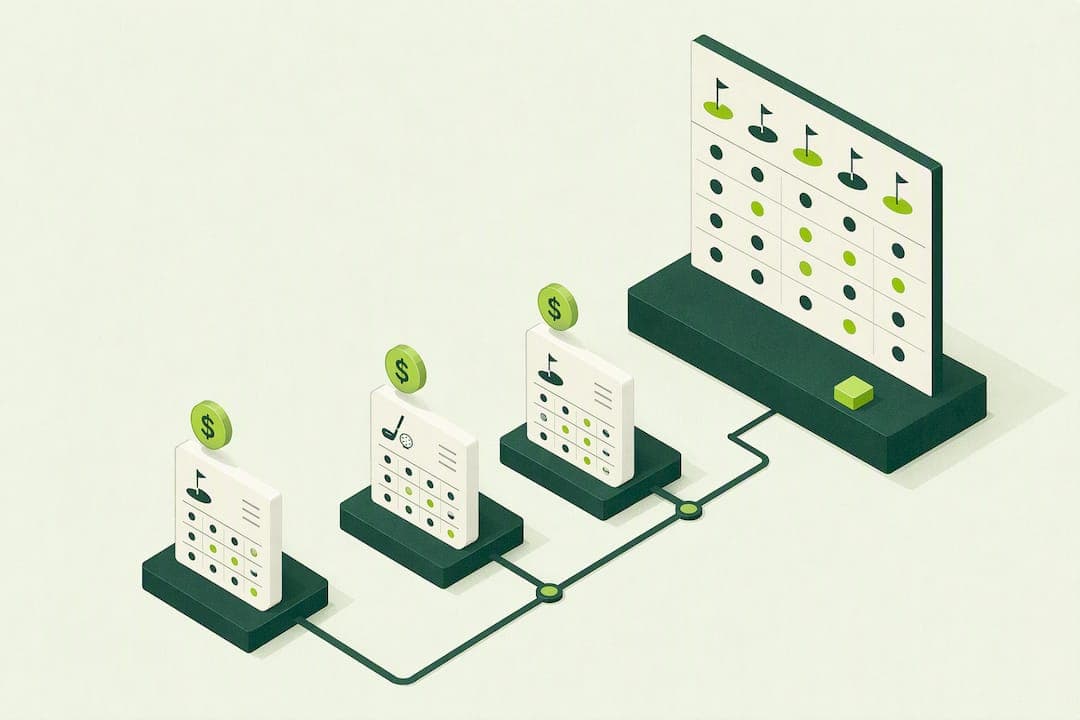
Run a ball drop, mulligan packages, a closest-to-pin contest, a silent auction, and a putting contest. Sell entries before the shotgun start and put a volunteer at each station. According to Cvent's tournament data, sponsorships and activations like these carry most of the revenue at a well-run event, and the IRS has clear rules for reporting prizes over certain thresholds. You can track the results live once you've locked in your lineup using an online scoring platform.
TL;DR:
- Sponsoring high-value activations like hole-in-one contests or helicopter ball drops requires insurance and sponsor backing to cover potential large prizes.
- Limiting the event to three or four well-staffed, desirable games with clear rules improves participant engagement and operational efficiency.
- Using a live scoring platform that charges a flat fee simplifies result tracking and enhances the awards ceremony experience.
- Proper IRS reporting and insurance are essential for prizes over specific thresholds, with recordkeeping necessary for legal compliance and future audits.
- Sponsorship revenue, especially from branded contests and activations, often exceeds direct entry fees, emphasizing the importance of strategic sponsor integration.
Table of Contents
- The Best Golf Fundraiser Games and Activations
- Running Each Game: Setup, Staffing, and Payment Flow
- Planning Checklist and Timeline for Adding Games
- Legal, Tax, and Insurance Basics You Shouldn't Skip
- Getting More From Sponsors and Auctions
- Managing Contests Without the Paperwork Headache
- After the Round: Following Up and Learning What Worked
- Organizer Perspective: What Committees Get Wrong
- A Simpler Way to Run Your Leaderboard
- Authoritative Resources Worth Bookmarking
- Sources
- FAQ
The Best Golf Fundraiser Games and Activations
You don't need twelve activations to have a great event. You need three or four that people actually want to pay for, staffed well enough that lines move. Here's how to sort them by type and pick the right mix for your field size and budget.
On-course contests
These are the backbone of almost every charity golf tournament, and they work because every golfer, regardless of skill, gets a shot at bragging rights.
- Longest drive. Set this up on a wide-open par 5 or a straight par 4 with room to spare. One volunteer with a stake and a tape measure is enough. Charge $10 to $20 per entry, following the pricing example RaiseRight suggests for similar contests.
- Closest to the pin. Place this on a par 3 with good sightlines for the volunteer judging it. It's a natural pairing with a sponsor sign, since every group passes through.
- Straightest drive. A quieter cousin of longest drive that rewards accuracy instead of power, which keeps shorter hitters in the game.
- Hole-in-one contest. This is your marquee moment, but it comes with strings attached. If you're offering a car, a cash jackpot, or anything over a few thousand dollars, you need hole-in-one insurance before you announce the prize, not after someone aces it.
High-revenue activations
- Golf ball drop. Sell numbered golf balls, then drop them from a height (a cherry picker, a ladder, sometimes a helicopter at bigger events) onto a target circle. Closest ball to the pin wins a prize funded by ball sales.
- $1,000 or $10,000 hole-in-one fund. A sponsor underwrites a big cash prize for anyone who aces a specific hole. This only works with a sponsor willing to fund it and insurance to back it.
- Helicopter ball drop variants. The same mechanic as the standard ball drop, scaled up for events with the sponsor budget to justify a helicopter rental. Skip this unless you already have a headline sponsor covering the cost.
Low-cost, high-volume options
- Mulligans. Sell do-over strokes in bundles before the round starts. This is an easy upsell during registration.
- The string game. Golfers buy a length of string (say, three feet per dollar) that they can use once during the round to improve a lie or shorten a putt.
- Wine pull. Guests pay a flat fee to pull a bottle blind from a display; some bottles are worth far more than the entry price, which is the appeal.
- 50/50 raffle. Half the pot goes to the winner, half to your cause. It requires almost no setup beyond tickets and a drawing.
- Putting contest. Set up near the clubhouse so non-golfers and spectators can play too. Charge per attempt and let people try as many times as they like.
Activities for spectators and non-golfers
Not everyone at your event swings a club, and the best fundraising golf tournaments give those guests something to spend money on too. A silent auction in the clubhouse, a wine pull table, and a cornhole or mini-putting green set up near the 19th hole all keep non-golfing guests engaged and spending. These activations often outperform on-course games per square foot of space, because they don't require a tee time to participate.

Running Each Game: Setup, Staffing, and Payment Flow
Every game needs the same four things before you open registration: a clear rule, a designated spot on the course, a volunteer who knows both, and a way to collect money without slowing down play.
Start with a setup checklist for each station:
- Roles: one volunteer to collect payment, one to explain the rule (combine these for slower holes)
- Supplies: signage, a cash box or card reader, tape measure or string, extra golf balls
- Timing: station open before the first group tees off, closed once the last group clears the hole
- Signage: price per attempt, rules in three lines or fewer, and your sponsor's logo if the hole is sponsored
For pricing, bundle rather than sell single tickets. A pack of three mulligans for $20 sells better than mulligans priced individually at $8 each, since golfers see it as a safety net rather than an impulse buy. RaiseRight's data backs this up: bundled entries consistently outsell single-ticket setups.
On payment, skip the cash box wherever you can. A tap-to-pay reader or a QR code linked to a simple checkout page keeps lines moving and gives you a digital record for reconciliation at the end of the day. Assign one volunteer per two stations to collect and count cash boxes hourly, not just at the finish.
Pro Tip: Give each station volunteer a laminated index card with the exact price, the one-sentence rule, and what to do if a golfer disputes a ruling. It saves arguments and keeps the line moving.
Planning Checklist and Timeline for Adding Games
Games don't run themselves. They need to be built into your tournament timeline the same way tee times and sponsor packages are.
- Four to six months out: Book your course date, start sponsor outreach for game-specific sponsorships (ball drop sponsor, hole-in-one sponsor), and decide whether any prize requires insurance.
- Four to six weeks out: Open ticket and entry sales. Pre-sell mulligan bundles and ball drop entries through your registration page; early-bird pricing on these bundles increases uptake.
- One to two weeks out: Recruit and assign volunteers to specific stations, then run a short training session covering rules, pricing, and payment tools.
- Day-of: Set up stations 60 to 90 minutes before shotgun start, rotate volunteer shifts at the halfway point if your field is large, and plan winner announcements for the reception, not mid-round.
Building this into your charity tournament checklist early keeps games from becoming a last-minute scramble the week before your event.
Legal, Tax, and Insurance Basics You Shouldn't Skip
Raffles and big prizes come with real reporting obligations, and skipping this step can cost your organization more than the fundraiser earns.
- Form W-2G and withholding. The IRS requires reporting when a raffle prize hits certain value thresholds, and federal withholding can apply to large prizes. IRS Notice 1340 walks through exactly when this kicks in and how withholding is calculated.
- The 85% volunteer-labor guideline. Gaming activities run substantially by volunteers, rather than paid staff, get more favorable tax treatment. The IRS gaming guidance outlines this alongside the bingo exception under Section 513(f), which can exclude certain bingo games from unrelated business income treatment entirely.
- Recordkeeping for Schedule G. If your organization files Form 990-EZ, gaming and fundraising event details often need to show up on Schedule G. Keep receipts, prize values, and volunteer hour logs as you go, not after the fact.
- Hole-in-one insurance. Any prize significant enough to hurt your budget if someone actually wins it (a car, a large cash jackpot) needs a policy before you announce it, not a promise to figure it out later.
None of this requires a lawyer for a modest local event, but a prize over a few thousand dollars is exactly where you want a CPA or your board treasurer to double-check the reporting rules before the tournament, not after.
Getting More From Sponsors and Auctions
Games are more valuable to sponsors than a logo on a banner, because a sponsored hole or activation gives their brand a physical presence golfers interact with directly.
- Title a hole after a sponsor. The closest-to-pin contest or the ball drop is a natural fit; sponsors get their name on signage every golfer passes.
- Package VIP experiences. A foursome paired with a private reception invite gives a bigger sponsor something tangible beyond a hole sign.
- Run auctions alongside games, not instead of them. CharityAuctions data shows sponsorships typically account for 40 to 60 percent of total golf fundraiser revenue, and mobile bidding lifts auction totals meaningfully compared to paper bid sheets.
- Price sponsor packages against reach. A hole sponsorship reaching 100 golfers is worth less than a ball drop sponsorship announced to the whole field at the reception; price accordingly.
Photogenic moments like a hole-in-one attempt or a ball drop also give sponsors something to share afterward, which extends their visibility well past the actual event day.
Managing Contests Without the Paperwork Headache
Running five games at once means five sets of results to track, and paper scorecards make that harder than it needs to be. A live scoring platform lets volunteers enter closest-to-pin and skins results hole by hole from a phone, and the leaderboard updates instantly for everyone watching at the reception.
- Live standings turn the awards ceremony into a moment guests are already watching, instead of a surprise announcement volunteers had to calculate by hand.
- Mobile-friendly entry means no one is squinting at a paper scorecard trying to read a golfer's handwriting.
- Setup takes minutes, which matters when your committee is juggling five other things the morning of the event.
Chasebirdies supports formats like scramble and shamble if you want to see how scoring works before your event.
After the Round: Following Up and Learning What Worked
The fundraiser isn't over when the last putt drops. What you do in the following two weeks shapes how much your next event raises.
Send a thank-you email within 48 hours to every participant and sponsor, and include the total raised if you have it. People give more the next year when they see their money mattered. Follow that with a short feedback survey, five questions at most: which games they liked, which felt confusing, whether pricing felt fair, and whether they'd return next year.
Pay close attention to which games actually sold. If your mulligan bundles sold out but your string game barely moved, that's a signal for next year's lineup, not just a footnote. Ask your volunteers too. The people running the closest-to-pin station all day usually know before anyone else which parts of the setup slowed down play or confused golfers.
Keep a simple spreadsheet from year to year: entries sold per game, revenue per game, and any operational hiccup worth fixing. Committees that treat this as an annual habit tend to see steady growth in per-player revenue, because they stop guessing and start building on what already worked.

Organizer Perspective: What Committees Get Wrong
Most committees spread themselves thin across too many games and understaff every one of them. Pick three you can run well instead of six you can barely cover, keep the rules on a sign at every station, and test your payment tool with a volunteer dry run before the actual day. A confusing line at the mulligan table costs you more goodwill than a missing sixth activation ever will.
— Jon
A Simpler Way to Run Your Leaderboard
If you're already juggling five game stations, a raffle table, and sponsor logistics, the last thing you need is a scoring system that adds more work. Chasebirdies charges a flat $1 per player with no subscription, so a 100-player charity event costs $100 total to run live, hole-by-hole scoring and leaderboards, no matter how many contests you've bolted onto the round. Many platforms require no app download for players or scorers, and setup can take minutes rather than a training session.
That matters most at the awards reception, when your committee wants results ready instantly instead of adding up scorecards by hand while guests wait. Sponsors often benefit from live leaderboards during activations, increasing their visibility beyond static signage. If you want to see how it handles a scramble, shamble, or best ball field, check the format guides and set up a test leaderboard before your next event.
Authoritative Resources Worth Bookmarking
- IRS gaming guidance for exempt organizations covers bingo exceptions and the volunteer-labor guideline in detail.
- IRS Notice 1340 explains raffle prize reporting and withholding thresholds plainly enough for a committee treasurer to follow.
- Cvent's tournament ideas guide is useful for high-ticket activation examples and sponsor-tie-in ideas.
- CharityAuctions' golf fundraiser guide breaks down sponsorship revenue share and mobile bidding data.
- RaiseRight's checklist gives concrete pricing examples for common on-course games.
Sources
- Exempt Organizations and Gaming (IRS TE/GE)
- Tax-Exempt Organizations and Raffle Prizes - Reporting Requirements and Federal Income Tax Withholding (IRS)
- 17 Golf Tournament Ideas to Bring In the Big Bucks | Cvent Blog
- Golf Fundraiser Guide | Tournament Ideas, Ball Drop & Planning Checklist
- Golf Tournament Fundraiser Ideas
FAQ
What Is the 3-3-3 Golf Game?
The 3-3-3 format splits the round into three segments played as best ball, then scramble, then alternate shot, according to L9GA's rules summary. It's popular for fundraisers because it keeps mixed-skill groups moving and gives everyone a role in the score at some point in the round.
How Do You Run a Golf Fundraiser?
Start four to six months out by booking your course, lining up sponsors, and choosing your format. Layer in two to four games with clear pricing and staffing, follow the IRS reporting rules for any raffle prize, and use a live scoring tool to keep results and standings simple on the day.
What Are Some Fun Golf Games for a Large Group?
Longest drive, closest to the pin, a putting contest, and a golf ball drop all scale well to large fields because they don't require every golfer to participate to keep momentum going. A silent auction or wine pull also works well for spectators and non-golfing guests who came for the reception, not the round.
What Are Effective Fundraising Ideas for a Golf Club?
Sponsorships typically drive 40 to 60 percent of total revenue at a golf fundraiser, according to CharityAuctions, so pairing games with named sponsors (a title hole, a ball drop sponsor) usually outperforms games run without sponsor backing. Bundling mulligans and pre-selling raffle tickets before the event also lifts per-player revenue.
Do Golf Fundraiser Raffles Require Tax Reporting?
Yes. Raffle prizes over certain value thresholds require a Form W-2G and may carry federal withholding, as detailed in IRS Notice 1340. Keep records of prize values and winner information for your organization's Schedule G filing if applicable.