Yes, glow golf tournaments are running right now, and courses across the country publish their dates every summer and fall. Most events use a 9-hole night scramble or an 18-hole glow-ball format, and registration pages spell out whether glow balls, dinner, and drink tickets come with your entry. Check the event examples below and follow the organizer's registration link that matches your date and location.
TL;DR:
- Most glow golf events cost around $65 to $75 per player or $350 for foursomes, often including glow balls, dinner, and contest prizes.
- Events are typically walking only with limited fields, staged in sections, and may feature practical rules like staggered starts or pre-event play.
- Expect formats like 9-hole scramble or 18-hole night play, with safety gear like LED headlamps, neon clothing, and sturdy shoes being essential.
- Organizers should publish clear registration links, policies, start times, and scoring methods upfront to ensure smooth gameplay and event management.
- Glow golf nights are popular for fundraisers due to their social, costume-friendly atmosphere, but require tight flow control and live scoring platforms.
Table of Contents
- Where Can You Find Upcoming Glow Golf Events?
- What Formats and Rules Should You Expect?
- How Much Do Glow Golf Tournaments Cost?
- What Should You Bring, and How Do You Stay Safe?
- Why Glow Golf Works So Well for Fundraisers
- Sources
Where Can You Find Upcoming Glow Golf Events?
You won't find one national calendar for glow golf. Instead, you'll need to check three types of pages: club event calendars, municipal golf course listings, and chamber-of-commerce event pages. Small clubs and city courses tend to announce their glow nights two to three months out, so bookmarking a handful of local courses is more reliable than a single search.
Here's a sample of what's currently posted for the 2026 season:
- Mentor Area Chamber of Commerce (Ohio): Its 5th Annual Glow Golf Tournament opens registration at 5:30 PM with golf starting at dusk, and a foursome entry includes dinner and glow balls.
- MassGolf at Unicorn Golf Course (Massachusetts): This club-hosted night event, covered in MassGolf's rundown, built its format and atmosphere around a full night-golf experience rather than a standard evening round.
- Bella Rosa Golf Club (Frederick): Its Glowball Events include green fees, a shared cart, range balls, one LED glow ball, and dinner for a per-person fee.
- Madras Glow Ball Golf Tournament (Oregon): Reported by the Madras Pioneer, this 18-hole night event runs in the evening, with team pricing including dinner and lighted course markers guiding play.
- Pinch Brook Golf Course (Morris County, New Jersey): Its Night Golf listing charges $65 per person, includes two glow balls, a glow necklace, and a drink ticket, and states plainly that the event is walking only.
- Compass Pointe Golf Courses: Its Night Golf September 2026 event pairs nine daytime holes with nine night holes, gives every player two premium glow balls, and opens with a shotgun start.
- Harvard Gulch Golf Course (City of Denver Golf): This municipal course posts a player fee with a walking-only policy and clear registration open and close dates.
When you land on any of these pages, scan for the same five things: the registration link, the total price, the actual start time, a walking-only note, and the refund or transfer policy. That's usually enough to decide if the event fits your schedule.
What Formats and Rules Should You Expect?
Most glow golf events fall into one of two buckets. A 9-hole night scramble typically starts with a shotgun start at dusk, letting your group choose the best shot from each stroke, similar to a standard scramble but played entirely or partly in the dark. An 18-hole glow ball event, like the one in Madras, runs the full course under lighted markers and takes three to four hours once the sun goes down. Some clubs mix in a shamble or best-ball round for the daylight nine before switching to glow rules at night.
Across nearly every listing, a few operational rules repeat:
- Events are walking only, since carts become a safety hazard once visibility drops.
- Fields are capped, often to keep pace of play manageable in low light.
- Course sections are limited, with organizers staging a daytime "lead-in" before full darkness.
- Contest holes are common, with prizes for best-dressed, nearest-the-pin, and longest glow drive.
Pro Tip: Ask the organizer whether the shotgun start covers the full field or staggers groups in waves. A staggered start means your tee time might land closer to full darkness than you'd expect.
How Much Do Glow Golf Tournaments Cost?
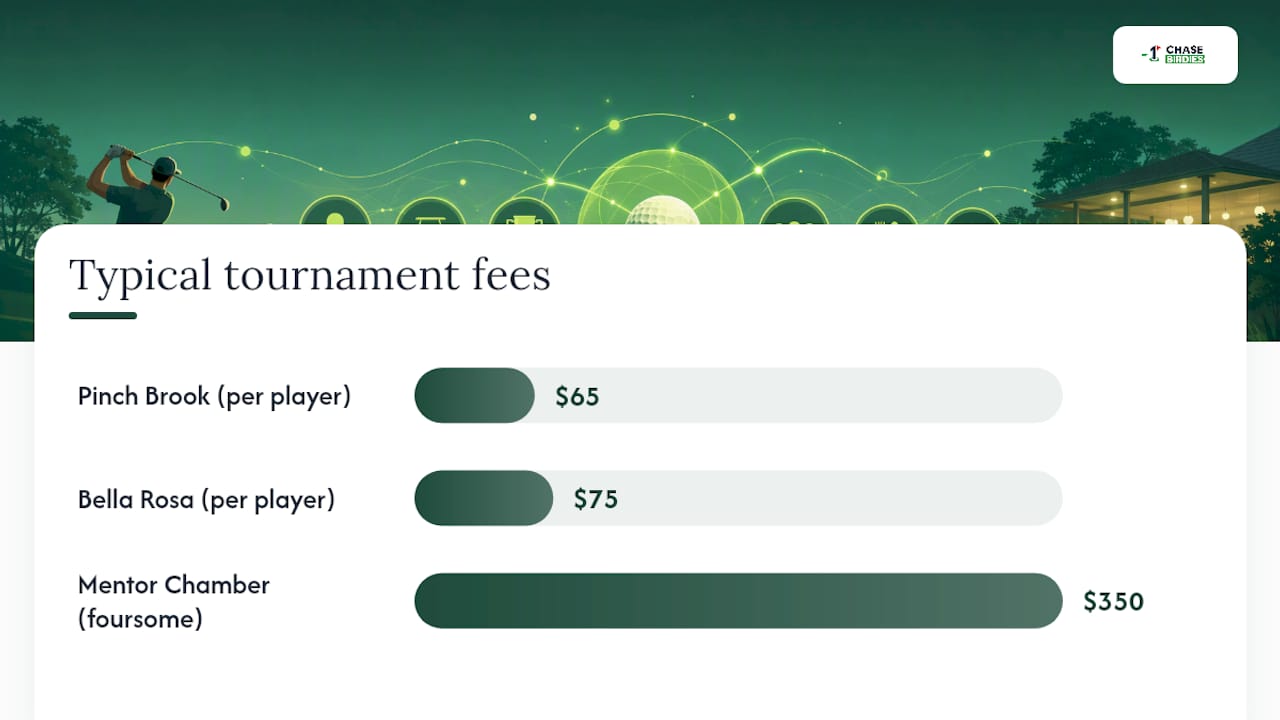
Pricing splits into two models: per-player fees and flat foursome rates. Per-player entries at courses like Pinch Brook and Harvard Gulch run about $65, while Bella Rosa's Glowball Events sit around $75 per person. Foursome-based pricing, like Mentor Area Chamber's $350 rate, tends to appear at chamber-run fundraisers rather than standalone club nights.
What that fee typically covers:
- Two glow balls per player (sometimes labeled "premium" glow balls, as at Compass Pointe)
- A glow necklace or bracelet
- Dinner or a drink ticket, occasionally both
- Door prizes or contest-hole prizes
- A shared cart for the daytime portion only, where carts are allowed at all
Registration usually opens two to three months before the event and closes once the field fills, so don't wait until the week of. Most listings state entries are non-refundable, though some courses allow you to transfer your spot to another player if you can't make it. Read that line before you pay.
What Should You Bring, and How Do You Stay Safe?
Pack for visibility first, comfort second. Here's what actually matters once the sun goes down:
- An LED headlamp or flashlight. This is the single most useful item you'll bring. Use it to find your ball and read the green, not to shine at other players.
- Spare batteries. A dead headlamp on hole 14 turns into a real problem fast.
- Neon or white clothing. Course markers and glow accessories only go so far. Bright clothing keeps your group visible to each other.
- Sturdy, closed-toe shoes. Footing gets tricky on uneven ground once you lose depth perception.
- A small first-aid kit or blister pads. Night rounds run long, and fatigue sneaks up.
- A backup glow ball, if your event allows bringing your own.
Stick to the walking-only rule even if you think you can sneak a cart onto the fairway. Stay on marked routes, and follow marshal instructions without arguing. Pace of play matters more at night than during the day. Locating a ball that landed off the fairway takes longer, so give your group extra time between shots and communicate where you last saw it land.
Pro Tip: Practice reading greens with just a headlamp before the event, even in your backyard at dusk. Distance judgment changes more than most first-timers expect.
Why Glow Golf Works So Well for Fundraisers
Glow events pull in a different crowd than a Saturday member-guest. Costumes, music, and dinner turn the round into a social night out, which is exactly why chambers of commerce and nonprofits gravitate toward the format for fundraising. That broader appeal comes with a tradeoff: you need tighter flow control. Capping the field, limiting the course to fewer holes, and staging a daytime lead-in before full darkness all keep the night moving instead of backing up on the back nine.
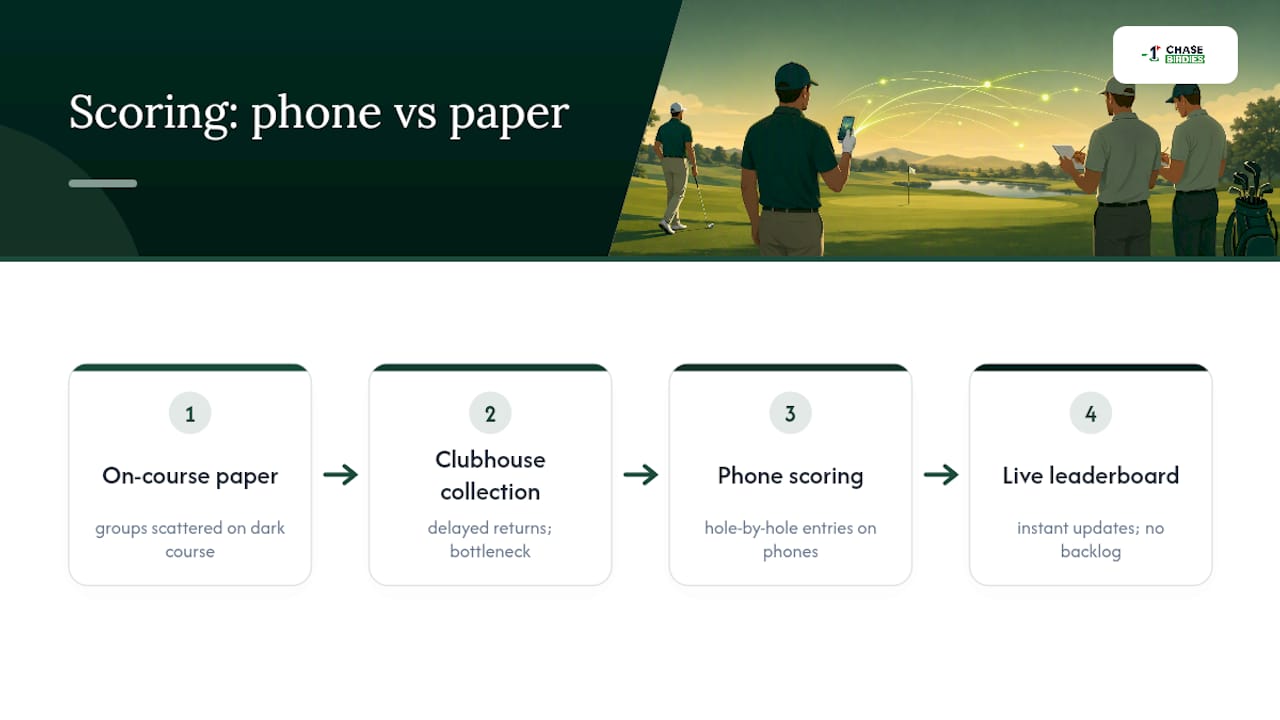
The scoring side is where a lot of first-time organizers get stuck. Chasing down scorecards from 20 groups scattered across a dark course by flashlight isn't realistic. A lightweight platform that takes hole-by-hole scoring and pushes it straight to a live leaderboard. This removes that bottleneck entirely, since players or scorers enter scores on their phones as they play instead of turning in paper cards at the clubhouse.
Before you open registration, run through this short checklist: publish clear rules up front, state the walking-only policy plainly, hand out a gear list so players show up prepared, cap your field to a number your course can actually run in the dark, and keep scoring visible so nobody wonders who's winning until the awards table. A charity golf scramble format works particularly well here, since it keeps pace of play forgiving for a mixed-skill crowd more interested in the glow sticks than their handicap.
If you're weighing which format fits your event, Chase Birdies' format guide breaks down scramble, shamble, and best-ball scoring side by side, and its $1-per-player pricing means a 100-player glow night costs you $100 to score, with no subscription tacked on afterward.
— Jon
Sources
- Register Now for Our 5th Annual Glow Golf Tournament - Mentor Area Chamber of Commerce
- First Time Series: Glow Golf At Night - MASSGOLF
- Madras Glow Ball Golf Tournament promises fun, flashing balls and neon outfits | Madras Pioneer
- Night Golf at Pinch Brook - Morris County Golf Courses
- Night Golf September 2026 - Compass Pointe Golf Courses